Three ways of making light
In an incandescent lamp a tungsten filament is heated by current until it glows. In a fluorescent lamp an electric arc excites mercury atoms, which emit ultraviolet radiation; the phosphor coating inside the glass tube converts that radiation into visible light. An LED does neither. It is a semiconductor diode: a chip of semiconducting material treated to form a p-n (positive–negative) junction.
Connected to a supply, current flows from the p-side, or anode, to the n-side, or cathode, and not the other way. Charge carriers — electrons and electron holes — enter the junction from the electrodes. When an electron meets a hole it drops to a lower energy level and releases the difference as a photon. Nothing is heated in order to glow, which is why diodes keep about 70% of their original output after 50,000 to 70,000 hours.
Colour comes from the material
The wavelength emitted depends on the compounds used to make the diode. Red LEDs are based on aluminium gallium arsenide, blue on indium gallium nitride, green on aluminium gallium phosphide. White light is not a native LED colour: it is produced either by mixing red, green and blue emitters, or by coating a blue LED with a phosphor that converts part of its output into a broader visible spectrum.
Four generations
Gen I
The light emitting diode was invented in the 1920s and became a practical electronic component in 1962. The first devices served as indicator lights on equipment and as simple signal displays in clocks and calculators — red at first, then other solid colours. Illumination was out of reach.
Gen II
In the mid-1990s high-brightness, high-efficiency diodes were developed that produced white light with enough output to make practical lighting conceivable. These appeared first in ornamental and low-requirement applications: decorative strings, torches, bicycle lamps.
Gen III
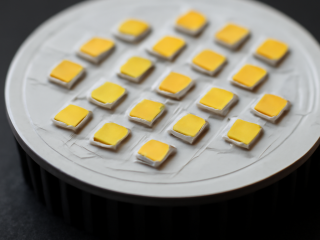
More powerful diodes were then bundled into arrays or clusters, so that a fixture could cumulatively replace incandescent, HID and even fluorescent lighting. These fixtures offered much longer lamp life and, in most cases, better efficiency than the conventional alternative, and they remain the most common type of LED luminaire on the market.
Gen IV
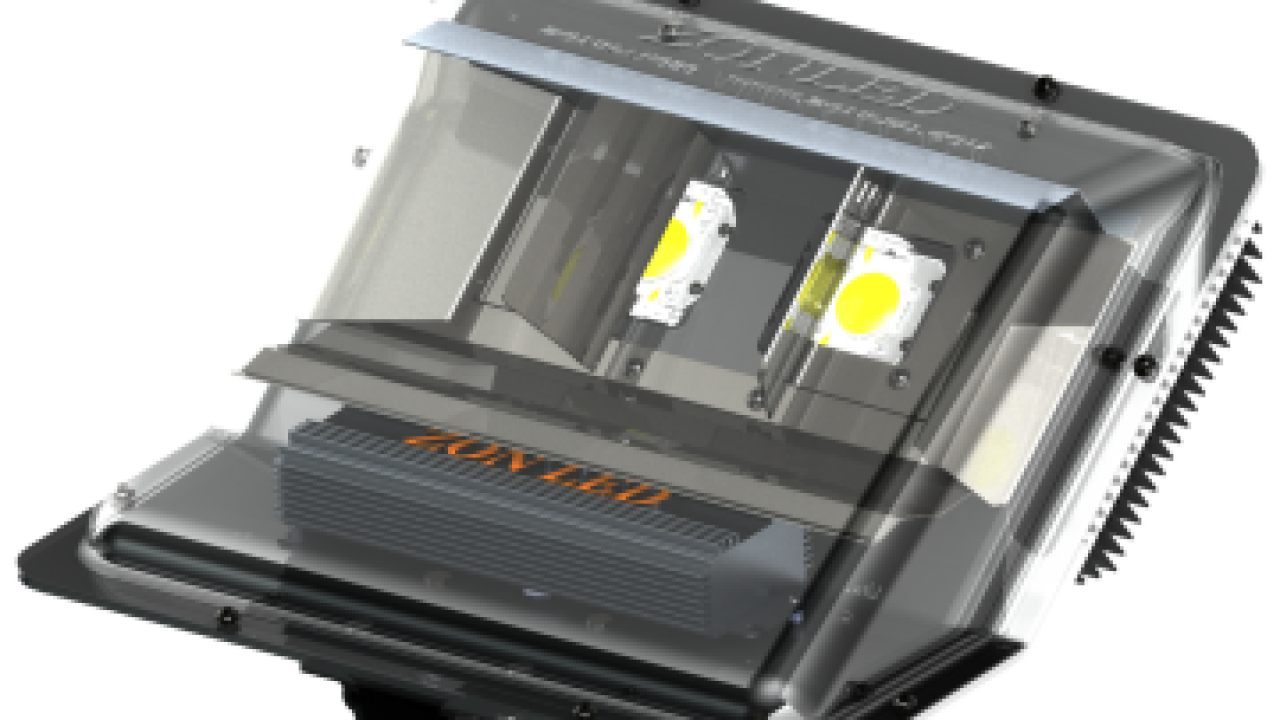
The next step is the planar LED array chip: many diodes consolidated onto a single light emitting chip. Combined with matched drivers and a housing designed to dissipate the heat, planar arrays give very high output from one optical source, and a wider spectrum — in the 5,000 to 5,500 K region — than conventional sources and most Gen III assemblies. The perceived brightness is correspondingly higher, and the light easier on the eye.