What the datasheet does not settle
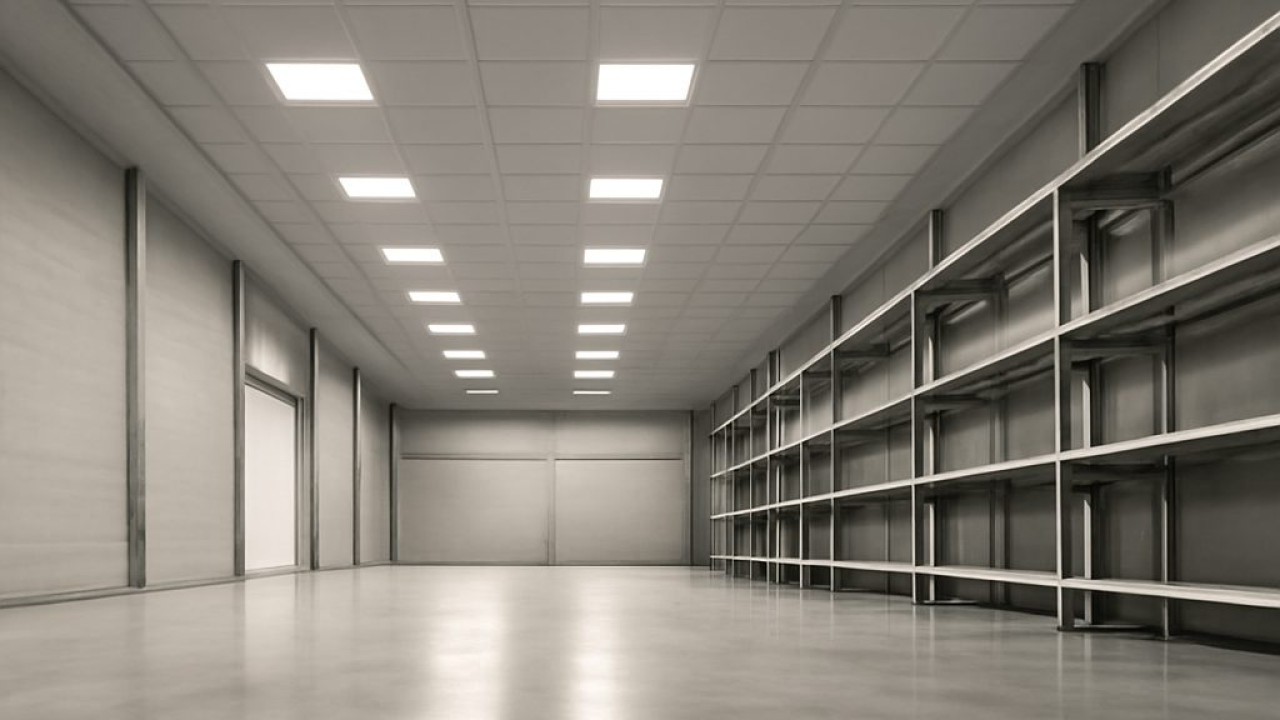
A fixture datasheet records what the fixture does: lumen output, input watts, beam distribution, rated life. What it cannot record is what happens in the room it is fitted into. Two identical highbay units at four metres and at seven give very different illuminance on the floor; the same lowbay troffer in a white-ceilinged office and in a workshop with dark walls and racking returns a different reading on the working plane. Spacing, mounting height, surface reflectance and whatever stands in the way all belong to the installation, not to the product.
The photometric file is the link
The bridge between the two is the photometric file. An IES file describes the measured intensity of a particular fixture in every direction, and it is the input a lighting calculation needs in order to say what that fixture will do at a given height over a given plane. Supplying the file alongside the specification has been ordinary practice in the industry for a long time, precisely because the specifier cannot work from a lumen figure on its own.
Doing the calculation in a browser
Calculation of this kind used to mean desktop software and a trained operator. Part of it has moved into the browser. Apokris is a 3D interior editor that carries a professional lighting calculation for specialists: the calculation runs on the manufacturer's real IES files and reports illuminance on the working plane, uniformity across it and the shadows cast by the furniture, with the result readable both as an image and as figures.
The scene itself is built in the same place. A floor plan becomes a solid model that can be walked through at eye height, finishes can be tried on the walls, floor and ceiling, and an existing drawing need not be redrawn — DXF goes underneath the plan as an underlay and STEP arrives as a solid model. For a manufacturer the relevant part is the other end: products can be placed in the catalogue so that a specifier picks the real fixture, with its own model and its own photometry, rather than a generic stand-in.
Why it matters to a fixture range
A range like this one is sold on replacement arithmetic — fewer units, lower load, longer intervals between visits. That argument only survives contact with a site if the layout is right, and the layout is a calculation, not an estimate. Checking a lighting layout online before the order is placed costs nothing and settles the question that a datasheet cannot: how many of these, at what height, and how far apart.